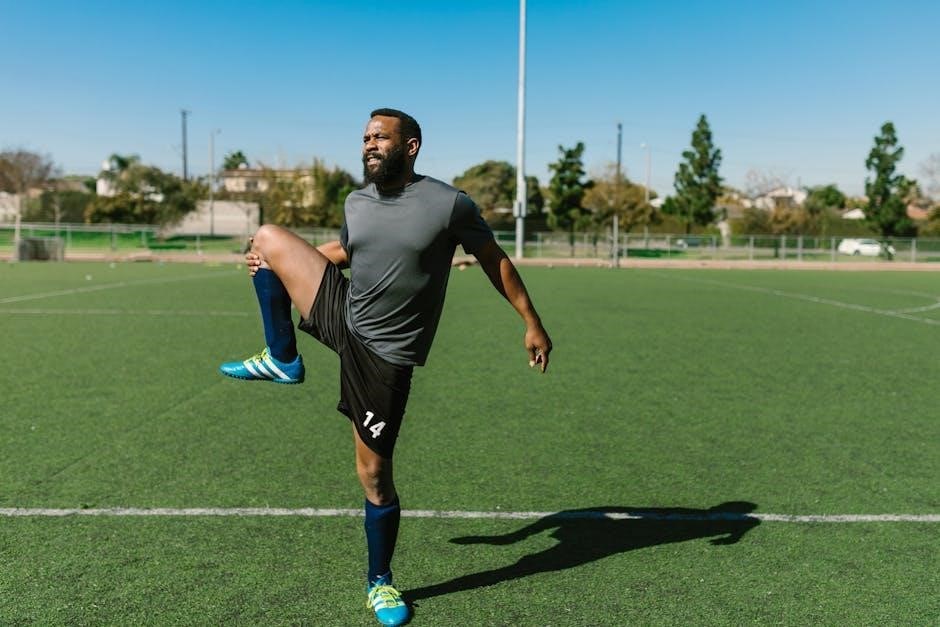

Hamstring Strain Exercises: A Comprehensive Guide
This guide details a non-operative rehabilitation protocol for hamstring injuries, focusing on tissue healing, protected range of motion, and minimizing atrophy․
Understanding Hamstring Strains
Hamstring strains are common injuries, occurring when the muscles at the back of the thigh are overstretched or torn․ Rehabilitation success depends on factors like injury chronicity, location – proximal, mid-belly, or distal – and the number of tendons/muscles involved․
Pre-injury gluteal strength and the presence of sciatic neural tension significantly influence outcomes․ A comprehensive approach considers these elements, collaborating closely with a physician․ The protocol is both time-based, following tissue healing stages, and criterion-based, adapting to individual progress․ Intervention should be tailored to exam findings and clinical decision-making, recognizing that severity and injury location dictate the rehabilitation course․
Grading Hamstring Strains: Severity Levels
Hamstring strains are classified by grade, influencing rehabilitation intensity and duration․ While the provided document doesn’t detail specific grading criteria, understanding severity is crucial․ Generally, Grade I strains involve minor fiber damage, causing mild discomfort and minimal functional loss․ Grade II strains present with moderate pain, swelling, and some functional impairment․
Grade III strains are the most severe, involving complete muscle rupture, significant pain, swelling, and substantial functional limitations․ The rehabilitation protocol adapts to these levels; early phases prioritize pain and inflammation control for all grades, with progressive loading increasing with severity․ Individual needs and clinical findings guide intervention․
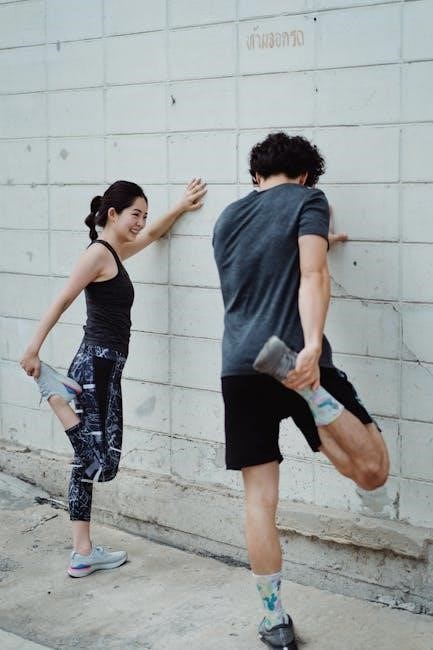
Phase 1: Early Rehabilitation (0-2 Weeks)
The initial phase (0-2 weeks) focuses on allowing tissue healing and initiating early, protected range of motion․ Rehabilitation goals include minimizing pain and inflammation while preventing muscular atrophy; Weight-bearing is permitted as tolerated, guided by the clinician’s assessment․
Precautions are vital; avoid stretching the hamstring through trunk flexion or knee extension to prevent re-injury․ Range of motion exercises involve active-assisted and passive hip and knee flexion, carefully avoiding any sensation of stretch or strain in the injured area․ Manual therapy, including soft tissue mobilization and myofascial release, may be implemented as needed․
Weight Bearing & Precautions
Weight-bearing during Phase 1 is permitted as tolerated, but should always be guided by the clinician’s evaluation and the patient’s pain levels․ It’s crucial to progress gradually, avoiding any activities that exacerbate symptoms․ Strict precautions must be observed to protect the healing tissue and prevent re-injury․
Specifically, limit any movements that stretch the hamstring muscle, including trunk flexion and knee extension․ These actions can easily induce a “stretch/strain” sensation, hindering the healing process․ Maintaining a pain-free range of motion is paramount․ Clinician oversight is essential to ensure appropriate progression and adherence to these vital precautions․
Range of Motion Exercises
Initiating early, protected range of motion (ROM) is a cornerstone of Phase 1 rehabilitation; Focus on active-assisted and passive hip and knee flexion exercises, carefully controlled to avoid stressing the injured hamstring․ The goal is to gently restore mobility without provoking pain or a sensation of strain within the affected area․
It’s critical to limit stretching and overall hip/knee ROM during this initial phase․ Movements should be performed within a comfortable range, stopping immediately if any discomfort arises․ Avoid any positions or motions that recreate the initial injury mechanism․ Consistent, gentle ROM exercises help prevent stiffness and promote early tissue healing, preparing for more advanced rehabilitation․
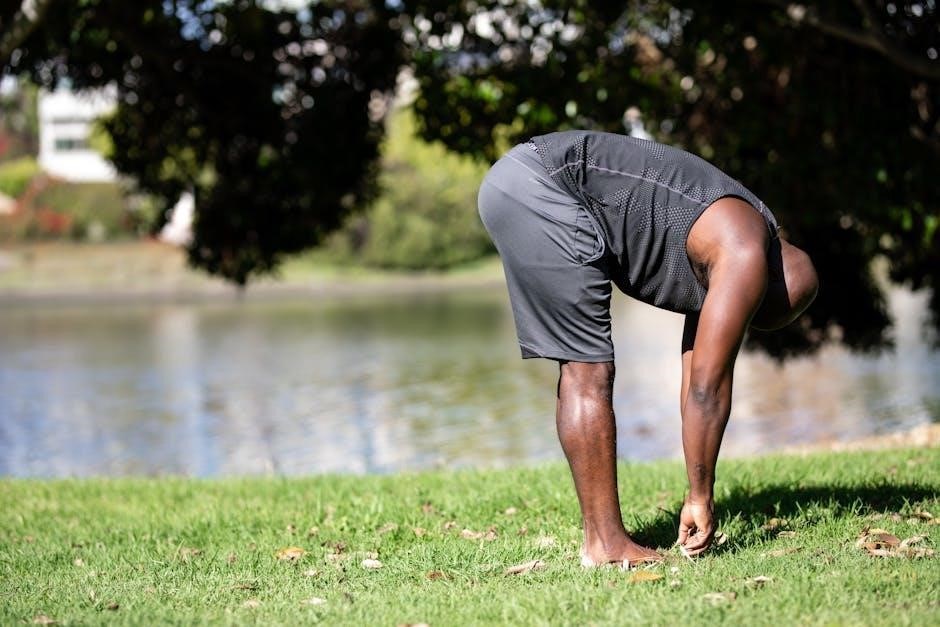
Manual Therapy Techniques in Phase 1
Manual therapy plays a supportive role in Phase 1, complementing range of motion and early healing processes․ Soft Tissue Mobilization (STM) along the hamstring muscle group can address localized tension and improve tissue extensibility, performed as needed based on clinical assessment․ Myofascial release techniques, applied without lotion, are also beneficial for addressing fascial restrictions that may contribute to pain or limited movement․
These techniques are not intended to aggressively stretch the hamstring but rather to gently restore optimal tissue mechanics and reduce discomfort․ Careful consideration of patient tolerance and avoidance of provoking pain are paramount․ Manual therapy should be integrated into a comprehensive rehabilitation plan, guided by ongoing evaluation and clinical decision-making․
Soft Tissue Mobilization (STM)
Soft Tissue Mobilization (STM) is utilized in Phase 1 to address localized tension within the hamstring muscle group․ This technique aims to improve tissue extensibility and reduce any palpable restrictions that may be contributing to discomfort or limited range of motion․ STM is applied as needed, guided by a thorough clinical assessment of the injured area and the patient’s response․
The application of STM should be gentle and pain-free, focusing on releasing muscle tightness without exacerbating the injury․ Clinicians should carefully monitor patient feedback and adjust the technique accordingly․ STM serves as an adjunct to other Phase 1 interventions, supporting the overall goals of pain reduction and early tissue healing․

Myofascial Release
Myofascial Release is incorporated into Phase 1 rehabilitation as a technique to address restrictions within the hamstring’s myofascial layers․ This intervention is specifically performed without the use of lotion, allowing for optimal grip and targeted pressure application․ The goal is to release fascial adhesions that may be limiting muscle length and contributing to pain;
Clinicians should apply sustained pressure to areas of palpable tension, encouraging the fascia to release and restore normal tissue mobility․ Patient comfort is paramount; the technique should be performed within the patient’s pain tolerance․ Myofascial Release complements STM, enhancing overall tissue extensibility and preparing the hamstrings for subsequent range of motion exercises․
Phase 2: Intermediate Rehabilitation (2-6 Weeks)
During this phase, the focus shifts towards restoring a greater range of motion and initiating gentle strengthening of the hamstring muscles․ Progression is guided by both time and the patient’s clinical response, considering the injury’s severity and location․
Progressive Range of Motion exercises are implemented, cautiously increasing hip and knee flexion while monitoring for any pain or “stretch/strain” sensations․ Initial Strengthening exercises are introduced, prioritizing exercises that minimize stress on the healing tissue․ These may include isometric contractions and low-load, controlled movements․ The aim is to rebuild muscle strength without compromising tissue integrity․
Progressive Range of Motion Exercises
This stage involves gradually increasing hip and knee flexion, carefully monitoring for any discomfort or reproduction of the “stretch/strain” sensation within the injured hamstring area․ Exercises are progressed as tolerated, prioritizing controlled movements over achieving maximal range immediately․
Active-assisted and passive stretching are utilized, ensuring movements remain pain-free․ Gentle hamstring slides and heel slides are beneficial․ Clinicians should continually assess the patient’s response and adjust the intensity accordingly․ The goal is to restore normal joint mechanics and flexibility without jeopardizing the healing process․ Avoiding overstretching is crucial during this intermediate phase of rehabilitation․
Strengthening Exercises ー Initial Focus
The initial strengthening phase concentrates on activating and restoring basic hamstring function without overloading the healing tissues․ Isometric exercises, such as hamstring sets and gentle bridges, are implemented to engage the muscles with minimal stress․
Focus is placed on gluteal activation as well, recognizing the synergistic relationship between the glutes and hamstrings․ Short arc hamstring curls and prone hip extensions are introduced cautiously․ The emphasis remains on proper form and pain-free movement․ Progression is guided by the patient’s tolerance and clinical assessment, avoiding any activities that provoke symptoms․
Phase 3: Advanced Rehabilitation (6-12 Weeks)
This phase prioritizes restoring full hamstring strength, power, and functional capacity to prepare for a return to sport․ Advanced strengthening exercises, including progressive loading with weights and resistance bands, are incorporated․
Plyometric exercises, such as box jumps and bounding, are gradually introduced to enhance explosive power․ Proprioceptive training and balance exercises are crucial for regaining neuromuscular control and preventing re-injury․ The focus shifts towards sport-specific movements and agility drills, mimicking the demands of the athlete’s activity․ Continued monitoring of symptoms and adjustments to the program are essential throughout this advanced stage․
Strengthening Exercises — Advanced Techniques
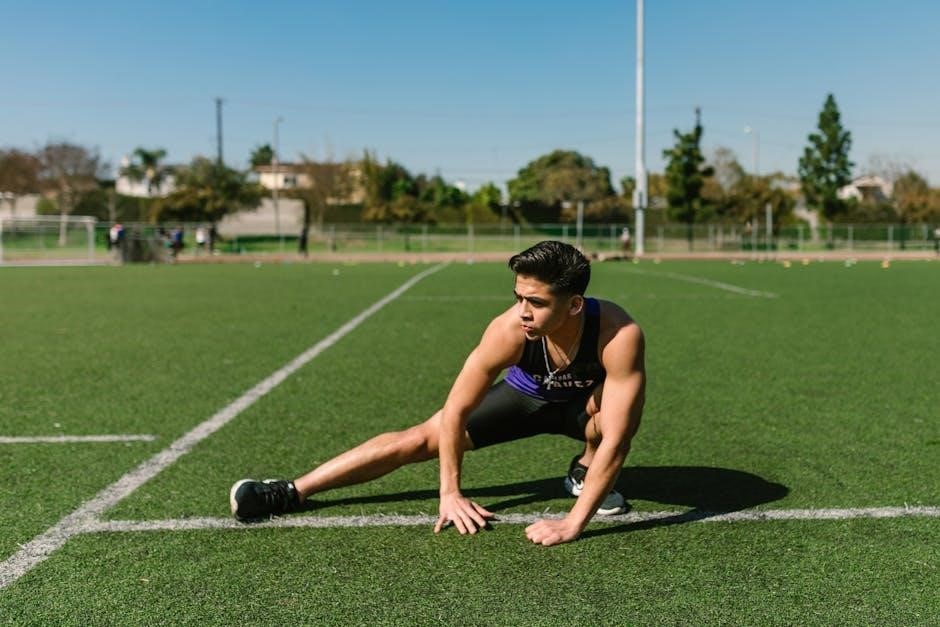
Advanced hamstring strengthening involves progressive overload and functional movements․ This includes weighted hamstring curls, Romanian deadlifts, and single-leg deadlifts to build strength and stability․
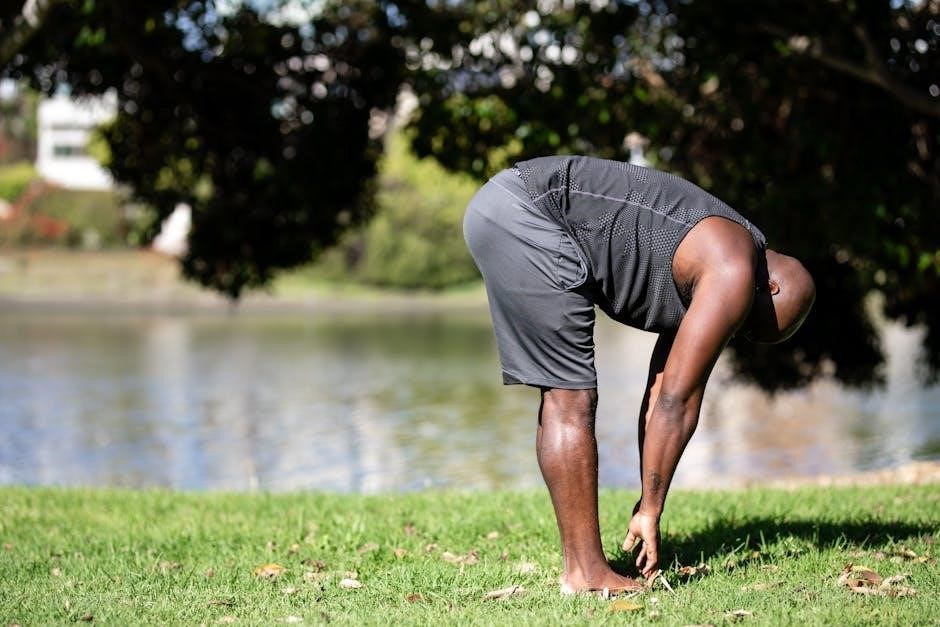
Eccentric strengthening remains vital, progressing to heavier loads and slower controlled movements․ Plyometric exercises like jump squats and lunges with a jump are introduced cautiously to develop explosive power․ Sport-specific drills, mirroring the athlete’s activity, are incorporated to enhance functional strength․ Monitoring for pain or discomfort is crucial, adjusting the intensity as needed to avoid re-injury and optimize rehabilitation outcomes․
Proprioceptive Exercises & Balance Training
Proprioception, or body awareness, is crucial for hamstring rehabilitation․ Exercises focus on restoring neuromuscular control and preventing re-injury․ Single-leg stance, wobble board activities, and balance beam walks challenge stability and coordination․
Progressive difficulty is key, starting with stable surfaces and advancing to unstable ones․ Incorporate dynamic movements like reaching and tossing a ball while maintaining balance․ These exercises enhance joint position sense and reactive muscle activation, improving the body’s ability to respond to unexpected forces․ Consistent practice builds confidence and prepares the athlete for the demands of their sport․
Hamstring-Specific Strengthening Exercises
Targeted exercises are vital for restoring hamstring strength and function․ Nordic hamstring curls are highly effective, emphasizing eccentric control during lengthening․ These should be initiated cautiously, with assistance as needed, focusing on controlled descent․
Glute-ham raises (GHR) provide another challenging option, requiring significant hamstring and gluteal activation․ Modifications, such as assisted GHRs, can be used to accommodate varying strength levels․ Progressive overload is essential, gradually increasing resistance or range of motion․ These exercises rebuild strength, power, and endurance, preparing the hamstrings for functional activities․
Nordic Hamstring Curls
Nordic hamstring curls are a crucial eccentric strengthening exercise, targeting the hamstrings during lengthening under load․ A partner is required to secure the athlete’s ankles while they slowly lower their torso towards the ground, controlling the descent as much as possible․
Initially, a significant range of motion may be unattainable; therefore, starting with a reduced range and utilizing assistance (bands or hands) is recommended․ Focus on maintaining a straight back and engaging the core throughout the movement․ Progression involves increasing the range of motion and reducing assistance, ultimately aiming for a full, controlled eccentric contraction․
Glute-Ham Raises
Glute-ham raises (GHRs) are an advanced exercise demanding significant hamstring and gluteal strength․ This exercise requires a specialized GHR machine, where the athlete secures their feet and slowly lowers their torso while maintaining a straight line from head to knees․
Initially, assistance from a band or partner may be necessary to facilitate the upward phase․ The focus should be on controlled eccentric lowering and a powerful concentric contraction to return to the starting position․ Progression involves reducing assistance and adding weight as tolerated, enhancing both strength and neuromuscular control․ GHRs are excellent for preparing the hamstrings for high-speed, functional movements․
Importance of Core Stability
A strong core is fundamental to hamstring rehabilitation, providing a stable base for lower extremity movements and preventing compensatory patterns․ Core stability influences pelvic control, which directly impacts hamstring function and reduces the risk of re-injury․
Weak core muscles can lead to increased stress on the hamstrings, hindering optimal movement mechanics․ Therefore, incorporating core strengthening exercises throughout all phases of rehabilitation is crucial․ Effective core training should address multiple planes of motion, focusing on endurance and control rather than maximal strength initially․ This holistic approach optimizes functional movement and supports hamstring recovery․
Exercises for Core Strengthening
Initial core exercises should focus on establishing a neutral spine and activating deep abdominal muscles․ Examples include pelvic tilts, transverse abdominis contractions, and bird-dogs, performed with controlled movements․ As tolerance increases, progress to more challenging exercises like planks (forearm and high), side planks, and dead bugs․
Advanced core work can incorporate rotational movements and anti-rotation exercises, utilizing resistance bands or light weights․ Consider exercises such as Russian twists, Pallof presses, and wood chops․ Remember to prioritize proper form and maintain core engagement throughout each exercise to maximize effectiveness and prevent injury․

Return to Sport Considerations
Returning to sport requires a gradual and progressive approach, ensuring the hamstring has regained full strength, flexibility, and neuromuscular control․ Criteria-based progression is crucial, not solely time-based, considering injury severity and individual healing․ Begin with low-intensity activities, gradually increasing volume and intensity․
Functional testing should assess agility, sprinting, and sport-specific movements․ Monitor for any pain or discomfort, and adjust the program accordingly․ A successful return necessitates achieving symmetrical strength and function compared to the uninjured limb, minimizing re-injury risk․ Collaboration with the physician and athletic trainer is essential throughout this phase․
Preventing Re-Injury: Long-Term Management
Long-term management focuses on addressing factors contributing to initial injury and minimizing recurrence․ Maintaining adequate gluteal strength and motor control is paramount, as weakness increases hamstring strain risk․ Address any identified neural tension, potentially contributing to hamstring tightness․ Continue a consistent strengthening and flexibility program even after returning to sport․
Implement a comprehensive warm-up routine before activity, including dynamic stretching and light cardiovascular exercise․ Proper biomechanics and technique during sport-specific movements are vital․ Regular monitoring for early signs of hamstring tightness or discomfort allows for prompt intervention, preventing escalation to a full strain․
Factors Influencing Rehabilitation Outcomes

Several factors significantly impact hamstring rehabilitation success, demanding individualized treatment plans․ The chronicity of the injury – how long it’s been present – plays a crucial role, with longer-standing injuries often requiring more extended rehabilitation․ Injury location, whether proximal, mid-belly, or distal, influences healing rates and exercise progression․
The number of tendons or muscles involved dictates the complexity of the rehabilitation process․ Pre-injury gluteal strength and motor control are vital; deficiencies must be addressed concurrently․ The presence of sciatic neural tension can contribute to hamstring tightness and impede recovery․ Close collaboration between clinicians and physicians is recommended to navigate these complexities․
Chronicity of Injury & Location
The duration of the hamstring injury, its chronicity, profoundly affects rehabilitation timelines and approaches․ Longer-standing injuries often present with increased scar tissue and altered biomechanics, necessitating a more gradual and comprehensive program․ Injury location – proximal, mid-belly, or distal – also dictates the rehabilitation strategy․
Proximal hamstring strains, near the ischial tuberosity, may involve the sciatic nerve, requiring neural mobilization․ Mid-belly strains are common and generally respond well to progressive loading․ Distal strains, closer to the knee, can be challenging due to tendon healing demands․ Understanding these nuances is crucial for tailoring effective exercise protocols․
Gluteal Strength & Neural Tension
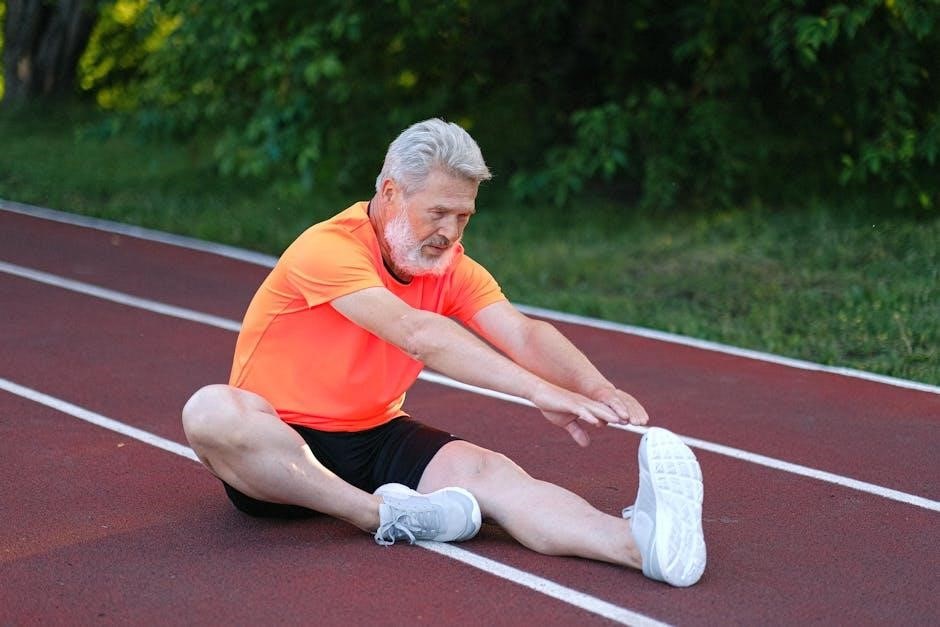
Pre-injury gluteal motor control and strength significantly impact hamstring rehabilitation outcomes; weakness can contribute to compensatory movement patterns and re-injury risk․ Strengthening the gluteal muscles – maximus, medius, and minimus – is therefore paramount throughout all phases․ Concurrently, assessing and addressing potential sciatic neural tension is vital, particularly with proximal hamstring injuries․
Neural tension can manifest as pain or limited range of motion, hindering rehabilitation progress․ Specific neural mobilization techniques may be incorporated to restore optimal nerve gliding․ A comprehensive approach considers both muscular strength and neurological factors, optimizing biomechanics and reducing the likelihood of recurrence․ Clinicians should collaborate with physicians regarding these factors․
Resources & PDF Downloads
For clinicians and patients seeking a detailed non-operative rehabilitation protocol for hamstring injuries, a valuable resource is available from Massachusetts General Hospital․ This document, titled “Rehabilitation Protocol for Hamstring Injury Non-op,” provides a time-based and criterion-based framework for recovery․
The PDF outlines phase-specific goals, weight-bearing guidelines, range of motion exercises, and manual therapy techniques․ It emphasizes individualized treatment based on injury severity, strain grade, and location․ Access the protocol at: massgeneral․org․ Remember to consult with a healthcare professional for personalized guidance․