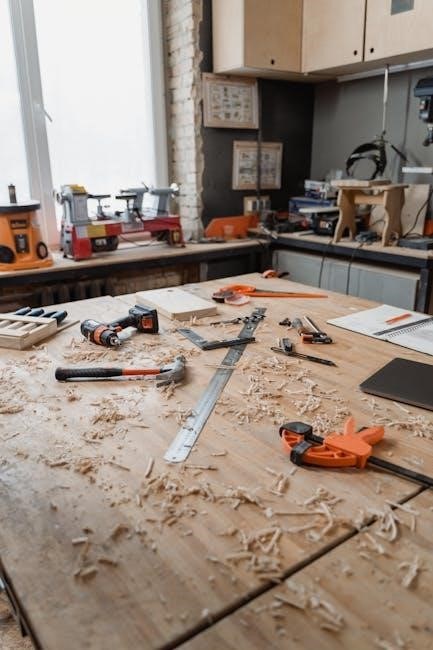
Clamp and Saw Guide: A Comprehensive Overview (Updated 12/17/2025)
BORA Tool recently expanded its saw guide offerings with the NGX 96-in. Quick-Connect Clamp Edge, featuring an innovative extension mechanism for enhanced usability.
What is a Clamp and Saw Guide?
A clamp and saw guide is a woodworking tool designed to ensure straight, accurate cuts when using handheld saws like circular or jig saws. BORA Tool’s NGX Clamp Edge exemplifies this, providing a secure, parallel reference point.

Essentially, it clamps to your workpiece, creating a guided pathway for the saw’s baseplate. This eliminates wandering and delivers professional-quality results, especially crucial for rip cuts and crosscuts. These guides significantly improve precision, reducing errors and material waste.
The Importance of Accurate Cuts
Achieving accurate cuts is paramount in woodworking, directly impacting project aesthetics, structural integrity, and overall success. A saw guide, like the BORA NGX Clamp Edge, addresses this need by minimizing deviations.
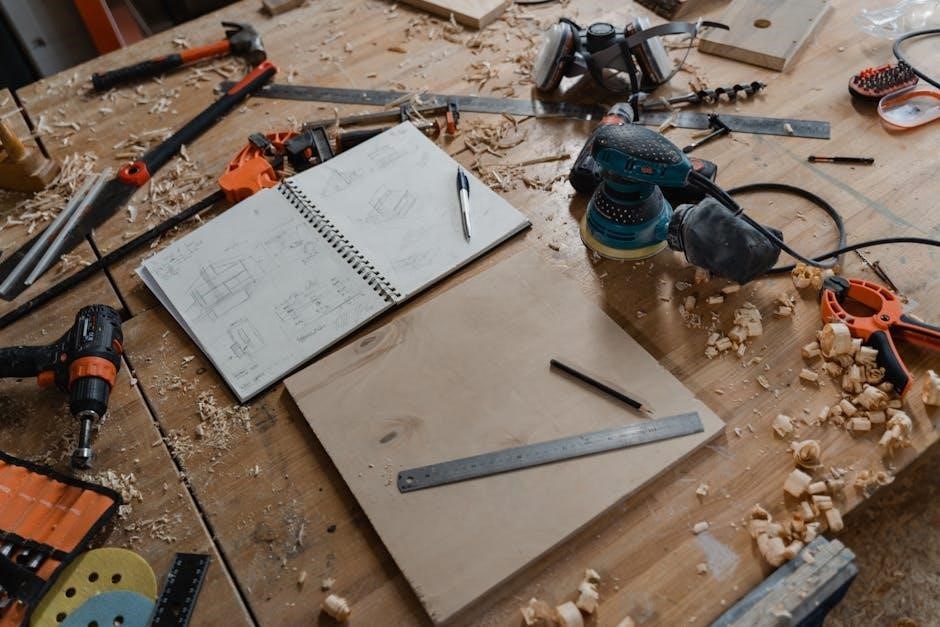
Precise cuts ensure tight-fitting joints, eliminating gaps and weaknesses. Inaccurate cuts lead to wasted material, frustrating rework, and potentially compromised project stability. Investing in a quality guide translates to professional results and a more enjoyable building experience.
Types of Saw Guides
Saw guides cater to diverse cutting needs. Straight line saw guides, often used with circular saws, ensure perfectly straight rips. Circular saw guides, like those from BORA Tool, enhance precision for sheet goods.
Jig saw guides provide control for curved and intricate cuts. The Kreg Rip-Cut System offers a versatile option for repeatable rip cuts. Choosing the right type depends on the saw and the project’s specific requirements.
Straight Line Saw Guides
Straight line saw guides are fundamental for achieving accurate, splinter-free rips and crosscuts. They typically clamp securely to the workpiece, providing a consistent reference edge for the saw’s base.
These guides often work with circular saws, transforming them into effective rip saws. Systems like the BORA NGX Clamp Edge exemplify this, offering quick connection and extended reach for larger materials, ensuring consistently straight results.
Circular Saw Guides
Circular saw guides enhance the precision of handheld circular saws, converting them into tools capable of remarkably straight cuts. They commonly feature a robust clamping system, securing to the workpiece for stability.
The BORA NGX Clamp Edge is a prime example, offering a 96-inch length and quick-connect functionality. These guides minimize blade wandering, crucial for accurate rip cuts and achieving professional-quality results on sheet goods and lumber.
Jig Saw Guides
Jig saw guides are designed to improve the accuracy of curved and intricate cuts made with a jig saw. While less common than guides for circular saws, they provide essential control when freehand cutting isn’t sufficient.
These guides often consist of a clamping mechanism and a straight edge, allowing for controlled movement along a marked line. They are particularly useful for projects requiring detailed shapes and precise angles, enhancing overall project quality.
Key Features to Look For in a Saw Guide
Selecting a saw guide requires careful consideration of several key features. Material and durability are paramount, ensuring the guide withstands repeated use. A robust clamping mechanism strength is vital for secure attachment and preventing movement during cuts.
Furthermore, prioritize adjustability and precision; the ability to fine-tune the guide guarantees accurate results. Look for features that minimize play and offer a stable platform for your saw.

Material and Durability
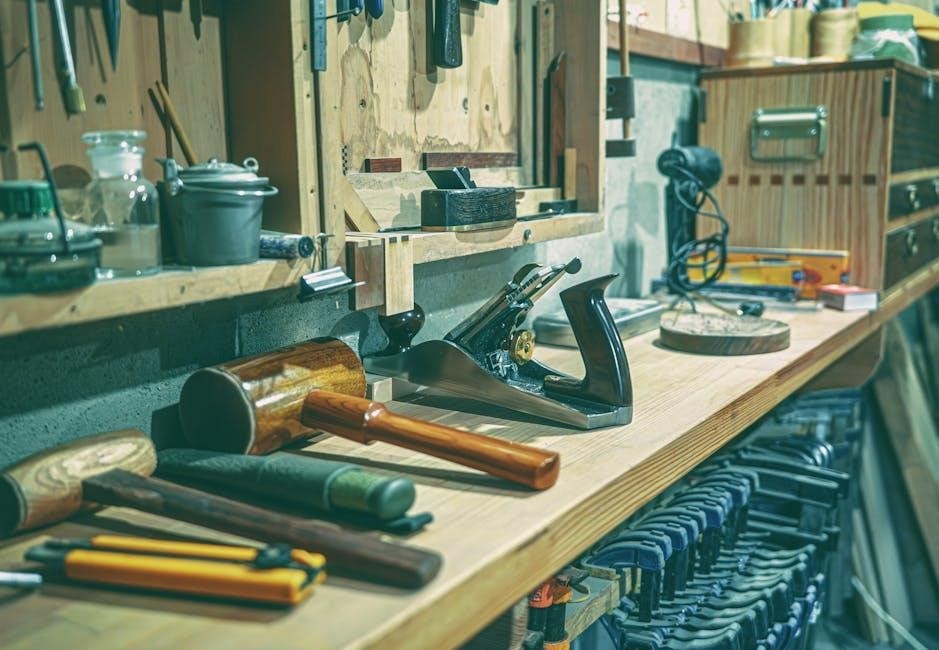
Saw guide construction significantly impacts its longevity and performance. High-quality materials like aluminum or hardened steel offer superior durability compared to plastic alternatives. These materials resist bending and warping, maintaining accuracy over time.
Consider the guide’s ability to withstand repeated clamping and sawing forces. A robust build ensures the saw guide remains reliable, even during demanding projects, providing a stable and consistent cutting experience.
Clamping Mechanism Strength
A saw guide’s effectiveness hinges on a strong, secure clamping system. The clamp must firmly hold the guide to the workpiece, preventing movement during cuts. Look for clamps with high-tensile steel or robust composite materials.
Quick-release mechanisms offer convenience, but prioritize clamping force. BORA Tool’s NGX Clamp Edge exemplifies this, providing a secure hold. Insufficient clamping leads to inaccurate cuts and potential safety hazards, so a reliable mechanism is crucial.
Adjustability and Precision

Saw guides demand precise adjustability to accommodate varying workpiece widths and cut angles. Features like micro-adjustments and clear measurement markings are essential for accuracy. The Kreg Rip-Cut System is known for its fine-tuning capabilities.
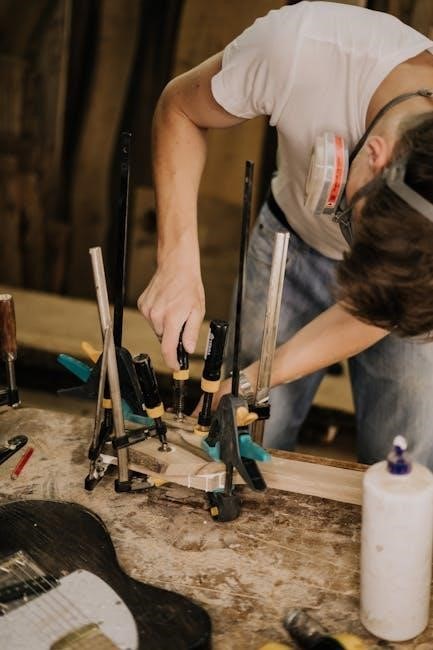
Look for guides that minimize play or wobble, ensuring the saw blade tracks consistently. A stable, adjustable system translates directly into cleaner, more accurate cuts, reducing material waste and improving project quality.
Popular Clamp and Saw Guide Brands
Several brands consistently receive high praise within the woodworking community. BORA Tool stands out with its innovative NGX Clamp Edge, offering quick connection and extended reach. Kreg’s Rip-Cut System is also highly regarded for its precision and versatility.
Milescraft Saw Guide provides a more budget-friendly option without sacrificing essential functionality. Each brand caters to different needs and skill levels, offering a range of solutions for accurate cutting.

BORA Tool – NGX Clamp Edge
The BORA Tool NGX 96-in. Quick-Connect Clamp Edge is a standout product, lauded for its extended 96-inch length and rapid connection system. This saw guide facilitates remarkably straight and accurate cuts, even with wider materials.
Its extension mechanism adds significant versatility, adapting to various project sizes. Woodworkers appreciate its robust construction and ease of use, making it a popular choice for both beginners and professionals.
Kreg Rip-Cut System
The Kreg Rip-Cut System offers a unique approach to achieving precise, repeatable rip cuts. This saw guide utilizes a universal clamping system compatible with various circular saws. It’s designed for quickly and easily creating perfectly straight edges on sheet goods and solid wood.
Users praise its portability and the accuracy it delivers, especially for breaking down large panels. The system’s adaptability and solid build quality make it a valuable addition to any workshop.
Milescraft Saw Guide
Milescraft Saw Guides provide a versatile and affordable solution for achieving accurate cuts with circular saws and jigsaws. These guides are known for their ease of use and compatibility with a wide range of saw sizes.
They often feature a robust construction and secure clamping mechanisms, ensuring stability during operation. Milescraft offers various models catering to different project needs, making them a popular choice for both beginners and experienced woodworkers.
How to Choose the Right Saw Guide for Your Needs
Selecting the ideal saw guide hinges on several factors. Project size and material dictate the necessary guide length and clamping strength. Consider your skill level; beginners benefit from simpler, more forgiving designs, while professionals may prioritize precision and advanced features.
Finally, budget considerations are crucial. Guides range from affordable options to high-end systems, so balance your needs with your financial constraints for optimal results.
Project Size and Material
Larger projects, like sheet goods, demand longer saw guides to ensure consistent, straight cuts across the entire material. Material thickness also plays a role; thicker stock requires a more robust guide and clamping system to prevent deflection.
Softer woods are more forgiving, while hardwoods necessitate greater precision and a sturdier setup. Always match the guide’s capacity to your project’s demands.
Skill Level – Beginner vs. Professional
Beginners often benefit from simpler, more forgiving saw guides with straightforward clamping mechanisms, prioritizing ease of use and safety. Professionals, however, demand precision, speed, and durability, often opting for advanced systems like track saw compatibility.
Experienced woodworkers may also appreciate customizable features and the ability to create custom jigs for specialized cuts.
Budget Considerations
Clamp and saw guide prices vary significantly, ranging from affordable DIY options to premium, professional-grade systems. Beginners can find functional guides for under $50, while more robust setups, like the Kreg Rip-Cut System or BORA Tool options, can exceed $200.
Consider your project frequency and desired precision when determining a realistic budget.
Setting Up a Clamp and Saw Guide
Proper clamping techniques are crucial for saw guide accuracy; ensure the guide is firmly secured to the workpiece, preventing movement during cutting. Ensuring parallelism between the guide and the cut line is paramount – use a square to verify alignment.
Always prioritize safety precautions, wearing eye protection and disconnecting power tools before adjustments.
Proper Clamping Techniques
Effective clamping involves selecting the right clamp for the job, considering workpiece thickness and guide design. Apply even pressure to avoid warping or shifting during cuts. BORA Tool’s Clamp Edge benefits from quick-connect features, streamlining setup.
Double-check clamp stability before operating any saw; a secure hold is vital for precision and safety.
Ensuring Parallelism
Parallelism is crucial for accurate cuts with a saw guide. Verify the guide runs perfectly parallel to the cutting line before securing clamps. Utilize a square or measuring tape to confirm alignment, eliminating angled or skewed results.
BORA’s NGX Clamp Edge, with its extended reach, aids in achieving consistent parallelism across larger workpieces, improving cut quality and minimizing material waste.
Safety Precautions During Setup
Prioritize safety when setting up a clamp and saw guide. Always disconnect power tools before adjustments. Securely clamp the guide to prevent movement during operation, avoiding potential kickback.
Wear appropriate safety glasses and hearing protection. Inspect the BORA NGX Clamp Edge and workpiece for defects. Never reach over or around a running blade – maintain focus and control at all times.
Using a Clamp and Saw Guide for Common Cuts
A clamp and saw guide excels at achieving precise rip cuts, ensuring consistent width for boards. For crosscuts, it guarantees square ends, vital for joinery. Even bevel cuts become manageable, offering accuracy previously difficult to attain.
Utilizing systems like the Kreg Rip-Cut, users can confidently tackle projects demanding straight, clean lines. Remember to always test on scrap material first!

Rip Cuts
Rip cuts, made with the grain, benefit immensely from a clamp and saw guide. Systems like the BORA NGX Clamp Edge provide a stable, parallel reference point for the saw. This eliminates blade drift, resulting in consistently sized boards.
Achieving accurate rip cuts is crucial for projects like shelving or panel construction. Proper clamping and guide alignment are key to success!
Crosscuts
Crosscuts, performed across the grain, demand precision, and a clamp and saw guide delivers. Utilizing a guide ensures a square, clean cut, vital for joining boards at right angles. The Kreg Rip-Cut System excels in this area, offering repeatable accuracy.
For projects requiring precise length, like picture frames or box construction, a saw guide is indispensable for professional-looking results.
Bevel Cuts
Achieving accurate bevel cuts – angled cuts not perpendicular to the wood’s face – can be challenging without proper support. A clamp and saw guide stabilizes the saw, preventing drift and ensuring consistent angles. BORA Tool’s NGX Clamp Edge, with its adjustable head, is particularly useful.
These cuts are essential for decorative trim, joinery like miters, and creating angled edges for aesthetic appeal, demanding a stable and precise setup.
Maintaining Your Clamp and Saw Guide
Regular maintenance extends the life and accuracy of your clamp and saw guide. Cleaning after each use removes sawdust and debris, preventing scoring of the wood or guide surface. Periodically inspecting for wear and tear – checking for loose clamps or damaged guide edges – is crucial.
Lubrication of moving parts ensures smooth operation. Proper storage, away from moisture and extreme temperatures, prevents corrosion and warping.
Cleaning and Lubrication
Cleaning your clamp and saw guide after each use is paramount. Remove sawdust and wood residue with a brush or compressed air, preventing build-up that hinders accuracy. For stubborn debris, a damp cloth works well, ensuring complete drying afterward.
Lubrication of clamping mechanisms and sliding surfaces with a silicone-based lubricant maintains smooth operation and prevents rust. Avoid oil-based lubricants, as they attract dust.
Inspecting for Wear and Tear
Regularly inspecting your clamp and saw guide is crucial for safety and precision. Check the clamping surfaces for dents or damage that could compromise grip strength. Examine the guide rail for any warping or cracks, impacting cut accuracy.
Look for loose screws or bolts and tighten them promptly. Worn-out rubber feet should be replaced to maintain stability. Addressing these issues proactively extends the tool’s lifespan.
Storage Best Practices
Proper storage preserves your clamp and saw guide’s functionality. Clean the tool thoroughly after each use, removing sawdust and debris. Store it in a dry environment to prevent rust or corrosion, ideally in its original packaging or a dedicated tool case.
Avoid stacking heavy objects on top, which could damage the guide rail. Keeping all components together simplifies setup and ensures nothing gets lost over time.
Advanced Techniques with Saw Guides
Saw guides excel when paired with track saws, offering superior precision for large sheet goods. Experienced woodworkers create custom jigs, adapting guides for specialized cuts and repetitive tasks. Combining guides with other tools—like miter saws or routers—expands versatility.
Experimenting with these techniques unlocks a new level of accuracy and efficiency in your woodworking projects, maximizing the guide’s potential.
Using with Track Saws
Track saws and saw guides create an exceptionally precise cutting system. The guide ensures the saw remains perfectly parallel to the cut line, eliminating wandering. Clamp the guide securely to your workpiece, providing a stable and accurate path for the saw’s baseplate.

This combination is ideal for breaking down large panels and achieving professional-quality results, especially when ripping plywood.
Creating Custom Jigs
Saw guides and clamps are invaluable for building custom jigs tailored to specific cutting tasks. Utilizing scrap wood and a robust clamping system, you can construct jigs for repeatable angles or specialized cuts.
These jigs enhance accuracy beyond standard guide capabilities, particularly for intricate woodworking projects. A well-designed jig, combined with a secure guide, minimizes errors and boosts efficiency.
Combining with Other Woodworking Tools
Clamp and saw guides significantly amplify the precision of tools like track saws, offering a streamlined cutting experience. Integrating these guides with miter saws or table saws further refines accuracy for complex joinery.
Using a clamp to secure the guide alongside other tools creates a stable, repeatable setup. This synergy minimizes blade wander and ensures consistently clean, accurate cuts across various woodworking applications.
Troubleshooting Common Issues
Saw blade wandering often stems from insufficient clamp pressure or a guide not perfectly parallel to the blade. Clamp slippage indicates a need for tighter fastening or a guide incompatible with the workpiece.
Inaccurate cuts can arise from improper setup, worn guide surfaces, or a dull blade. Regularly inspect the guide for damage and ensure secure clamping before each use to maintain precision.
Saw Blade Wandering
Saw blade wandering frequently occurs when the clamp isn’t applying enough force, allowing the saw to deviate from the intended path. A guide that isn’t perfectly parallel to the blade’s cutting plane is another common culprit.
Ensure the saw guide is securely fastened and the clamp is tightened sufficiently. Inspect the guide’s surface for any imperfections that might cause the blade to drift during operation.
Clamp Slippage
Clamp slippage is a frustrating issue, often stemming from insufficient clamping pressure or using a clamp not designed for the saw guide’s material. Smooth surfaces on either the workpiece or the guide can also contribute to this problem.
Verify the clamp is properly engaged and tightened to its maximum capacity. Consider adding rubber pads or liners to increase friction and prevent unwanted movement during cutting operations.
Inaccurate Cuts
Inaccurate cuts when using a clamp and saw guide often point to improper setup or a lack of precision. Ensure the guide is perfectly parallel to the cut line and securely clamped to prevent shifting during operation.
Double-check the saw guide’s alignment and calibrate it before each use. A dull or incorrect blade can also contribute to inaccuracies; maintain a sharp blade and select the appropriate type for your material.